What Disabilities Qualify for Vocational Rehabilitation?
Physical disabilities, mental health conditions, developmental disabilities, learning disabilities, and sensory impairments may qualify for vocational rehabilitation when they create a substantial barrier to employment. Examples include spinal cord injuries, arthritis, PTSD, autism, dyslexia, vision loss, and hearing loss. However, eligibility depends on how a condition affects your ability to find, keep, return to, or advance in suitable work, not on the diagnosis alone.
If you receive SSDI or disability-based SSI, you are generally presumed eligible for state vocational rehabilitation services when you intend to pursue an employment goal. Other applicants can qualify through an individual assessment of their disability and employment needs.
This guide explains which disabilities may qualify, how eligibility is decided, what services are available, and how to apply.
What Is Vocational Rehabilitation?
Vocational rehabilitation (VR) is an employment-support program that helps people with disabilities prepare for, find, keep, advance in, or return to work.
State VR agencies help eligible individuals identify suitable career goals and obtain services needed to reach those goals.
Depending on the person’s situation, support may include career counseling, job training, a vocational evaluation, assistive technology, job placement, or help staying employed.
The purpose is to match employment opportunities with a person's abilities, interests, and needs. VR does not require everyone to return to the same job they performed before becoming disabled.
For example, a construction worker with a permanent back injury may need support preparing for less physically demanding work. Someone with hearing loss may be able to remain in their current occupation with suitable communication technology.
Which Types of Disabilities May Qualify for Vocational Rehabilitation?
There is no fixed list of approved diagnoses for state VR eligibility. Federal rules prohibit state agencies from finding someone ineligible solely because of their type of disability.
The following table gives common examples of conditions that may create employment barriers.
| Disability category | Examples | Possible employment barriers |
|---|---|---|
| Physical disabilities | Spinal cord injury, amputation, arthritis | Difficulty lifting, standing, walking, or reaching |
| Chronic and neurological conditions | Multiple sclerosis, epilepsy, stroke-related impairments | Fatigue, movement limits, or difficulty maintaining a schedule |
| Mental health conditions | Depression, PTSD, bipolar disorder | Challenges with concentration, stress, attendance, or workplace interactions |
| Developmental and intellectual disabilities | Autism, Down syndrome, intellectual disability | Need for adapted training, communication support, or job coaching |
| Learning and cognitive disabilities | Dyslexia, dyscalculia, traumatic brain injury | Difficulty with reading, memory, calculations, or processing information |
| Sensory disabilities | Blindness, low vision, deafness, hearing loss | Need for accessible materials, communication tools, or specialized technology |
These conditions may support eligibility. They do not guarantee approval or establish that every person with the condition needs the same services.
Physical Disabilities and Mobility Limitations
Physical disabilities can affect the movements and tasks required for work.
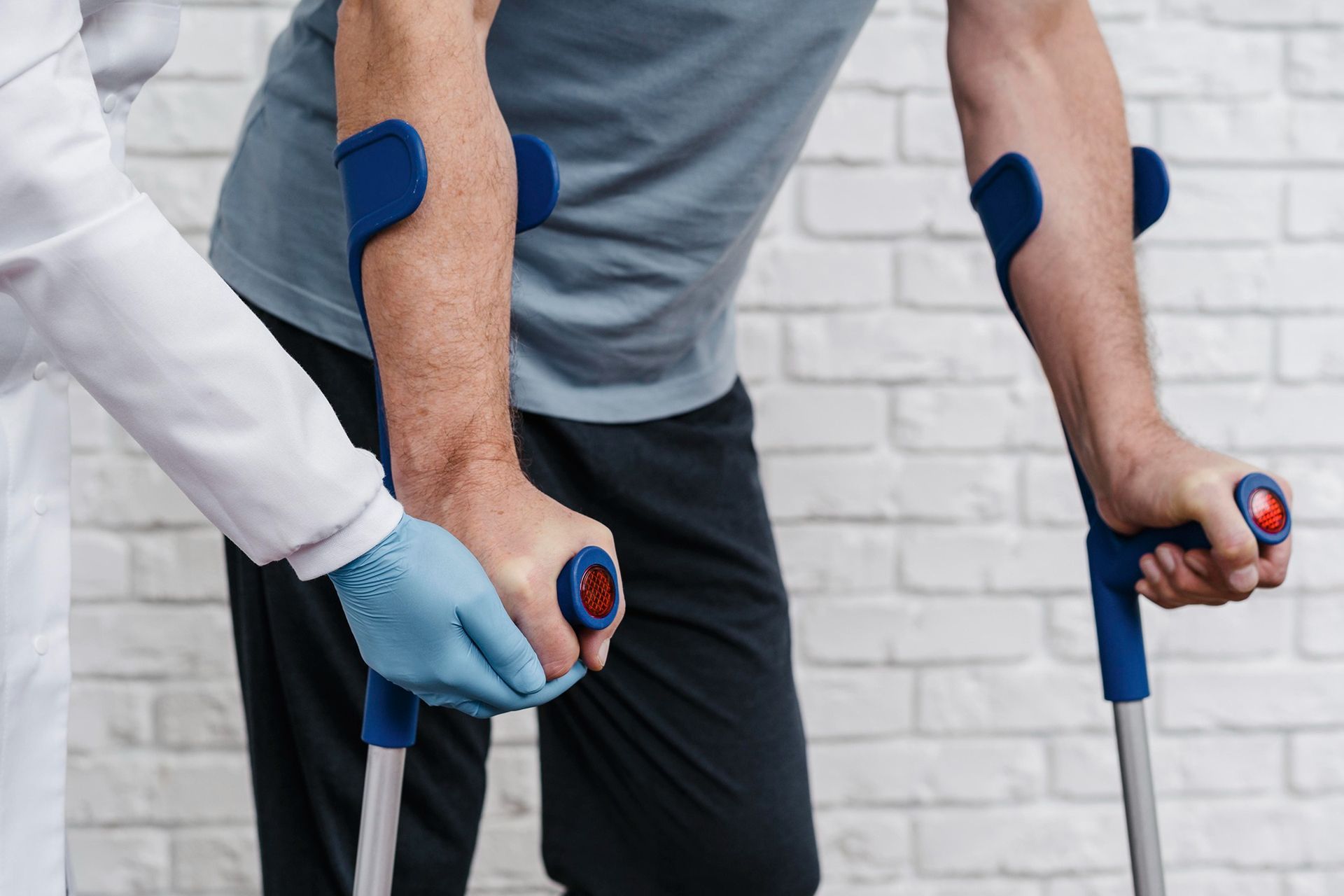
A person may have difficulty standing for long periods, lifting objects, using their hands, climbing stairs, or traveling to a workplace.
Conditions that may create these limitations include spinal cord injuries, amputations, cerebral palsy, arthritis, and serious back or joint conditions.
Consider a warehouse employee who develops a permanent lifting restriction. The person may have useful experience and strong work skills but no longer be able to perform the essential tasks of the previous job.
VR services may help the employee identify other suitable occupations, receive training, or explore changes that make continued employment possible.
Chronic Health and Neurological Conditions
Some medical conditions affect work even when a person has no obvious mobility limitation.
Multiple sclerosis, epilepsy, heart disease, diabetes-related complications, and lasting effects of a stroke may affect energy, movement, concentration, or consistency at work.
Eligibility depends on the individual's circumstances.
One person with a chronic illness may work without additional support. Another may need a different schedule, workplace equipment, or training for a new occupation.
The important question is how the condition affects employment and whether VR services could address that barrier.
Mental Health Conditions
Mental health conditions may qualify when they substantially affect employment.
Examples include depression, anxiety disorders, bipolar disorder, PTSD, and schizophrenia.
Depending on the condition and the individual, employment barriers may involve:
- Maintaining concentration
- Managing workplace stress
- Following a regular schedule
- Communicating with coworkers
- Adjusting to changes in tasks or routines
For example, a person with PTSD may find that certain work environments worsen symptoms. A rehabilitation counselor may help explore other suitable settings or support needs.
An applicant does not need a visible disability to be considered for VR services.
Developmental and Intellectual Disabilities
Developmental and intellectual disabilities may affect learning, communication, problem-solving, or the amount of assistance needed to perform work tasks.
Autism, Down syndrome, and intellectual disabilities are examples.
Some individuals may benefit from structured training, job coaching, customized work tasks, or supported employment.
The goal should reflect the person's strengths and interests. A diagnosis alone should not determine which jobs an individual can or cannot pursue.
Learning and Cognitive Disabilities
Learning disabilities may affect reading, writing, mathematics, or the ability to process information.
Dyslexia and dyscalculia are common examples. A traumatic brain injury may also create cognitive limitations involving memory, attention, or planning.
A person may be highly capable of performing practical job duties but struggle with written instructions or a training format.
VR services may help identify accessible learning methods, suitable tools, or another pathway to employment.
Vision and Hearing Disabilities
People who are blind, have low vision, are deaf, or have hearing loss may qualify when they need employment-related assistance.
Possible services include accessible materials, assistive technology, specialized training, or help identifying suitable accommodations.
For example, an employee with low vision may be able to continue working with screen-reading technology or other accessible equipment.
The focus should be on the support needed to perform the job, not an assumption that a sensory disability prevents employment.
Substance Use Disorders
A substance use disorder may be considered when it involves a qualifying impairment that creates a substantial employment barrier.
Having a history of substance use does not automatically establish eligibility.
A state agency will assess the individual's current circumstances, functional limitations, and need for employment services under the applicable program rules.
What Are the Eligibility Requirements for Vocational Rehabilitation?
Under the federal framework for state VR programs, eligibility generally involves three findings:
- You have a physical or mental impairment.
- The impairment creates a substantial barrier to employment.
- You need vocational rehabilitation services to prepare for, secure, retain, advance in, or regain suitable employment.
A substantial employment barrier means the disability creates a meaningful obstacle to achieving an appropriate employment goal.
It does not necessarily mean you are completely unable to work.
Example: Same Diagnosis, Different Employment Needs
Two people may have arthritis.
One works comfortably in a role that does not aggravate their symptoms. The other can no longer perform a job requiring repeated lifting and gripping.
Both have the same general diagnosis, but their employment needs differ.
The second person may require retraining or other services because the disability has created a substantial barrier to continuing in the previous occupation.
This is why an individualized assessment matters more than a diagnosis list.
Does Receiving SSDI or SSI Automatically Qualify You?
People determined eligible for SSDI or SSI based on disability or blindness are generally presumed eligible for state vocational rehabilitation services when they intend to achieve an employment outcome.
Presumed eligibility means the state agency generally does not need to establish disability-related eligibility again in the usual way.
However, it does not mean every requested service will automatically be approved.
The agency still develops an employment plan and determines which services are appropriate. Availability may also be affected by a state’s service-priority system.
People who do not receive SSDI or SSI can still qualify through the regular eligibility process.
Can You Qualify for Vocational Rehabilitation if You Already Have a Job?
Yes. You do not have to be unemployed to qualify.
A person may need help keeping a current job, returning after an injury, or advancing into another position.
For example, a healthcare worker who develops a hand impairment might need assistive equipment or training for a role with different physical requirements.
Another employee may need help adapting to new duties after a change in vision or hearing.
Federal eligibility rules include assistance to retain and advance in employment, not only assistance finding a first job.
Can People With Severe Disabilities Receive VR Services?
Yes. A significant disability does not automatically make a person ineligible.
Some applicants need extensive assistance, such as multiple forms of training, assistive technology, or supported employment.
Federal rules presume that an applicant who meets the impairment and employment-barrier requirements can benefit from services toward an employment outcome. There are additional safeguards before a state agency may determine that someone cannot benefit because of disability severity.
However, being eligible does not always mean services begin immediately.
Some state agencies use an order of selection when they cannot serve every eligible applicant at once.
This system prioritizes applicants according to disability-related service needs.
If you are found eligible, ask whether a waiting list or priority category affects access to services.
What Services Does Vocational Rehabilitation Provide?
VR services are individualized. A person who needs help remaining in a current job may have a different plan from someone preparing for an entirely new career.
Common services include:
| VR service | How it may help |
|---|---|
| Vocational evaluation | Assesses work abilities, skills, interests, and employment barriers |
| Career counseling | Helps identify suitable employment goals |
| Education and job training | Builds skills needed for a selected occupation |
| Assistive technology | Helps the person perform tasks affected by a disability |
| Job search and placement | Supports applications and the search for suitable work |
| Job coaching | Provides assistance learning or maintaining work tasks |
| Supported employment | Offers intensive individualized assistance when needed |
| Job retention services | Helps a person remain employed after disability-related difficulties |
Not every applicant receives every service. The state agency identifies appropriate support through an individualized employment plan.
How to Apply for Vocational Rehabilitation
The exact steps vary by state, but the process generally follows the same pattern.
Step 1: Contact Your State VR Agency
Start with the vocational rehabilitation agency serving your state.
Explain that you have a disability affecting your employment and would like to apply for services.
Step 2: Describe Your Work-Related Limitations
Be specific about what has become difficult.
Instead of saying only “I have a back injury,” explain whether you struggle with lifting, prolonged sitting, standing, or other duties required by your job.
Also describe what type of work you want to pursue.
Step 3: Provide Available Records
The agency may review:
- Medical records
- Psychological or educational evaluations
- Employment history
- Training and qualifications
- Information about functional restrictions
- SSDI or SSI documentation, if applicable
Ask your counselor which records are needed. Do not assume you must gather every document before making initial contact.
Step 4: Complete the Eligibility Assessment
A counselor evaluates your disability-related employment barriers and need for services.
Existing records may be sufficient. If they are not, additional assessment may be needed.
Step 5: Develop an Individualized Plan for Employment
Once eligible, you and the counselor develop an Individualized Plan for Employment (IPE).
The IPE identifies your employment goal and the services needed to work toward it.
This is the correct program term. The previous version of this article incorrectly called it a “Personalized Employment Plan.”
Step 6: Participate in Services and Review Your Progress
Depending on the plan, you may receive training, career counseling, job placement assistance, or other approved support.
Tell your counselor if your condition, work goals, or service needs change.
IDHS Division of Rehabilitation Services: Information for Illinois Residents
If you live in Illinois, your state agency is the Illinois Department of Human Services, Division of Rehabilitation Services (IDHS-DRS).
Its vocational rehabilitation program provides employment-related services for eligible people with disabilities, including vocational assessment, career development, counseling, and job placement support.
Illinois residents seeking help should contact IDHS-DRS directly and ask about the application process for employment services.
This is a state program. It is separate from Occupational Assessment Services (OAS) Corp, which provides independent vocational and related expert services.
Vocational Rehabilitation vs. an Independent Vocational Evaluation
These terms are related, but they describe different things.
Vocational rehabilitation is a program or process that helps someone reach an employment goal.
A vocational evaluation is an assessment of work-related abilities, limitations, skills, and employment options.
A state VR agency may use a vocational evaluation to help develop a person’s employment plan.
Independent vocational evaluations are also used in disability, personal injury, workers' compensation, and other legal matters to examine employability and earning capacity.
OAS’s vocational evaluations are used to assess questions such as whether a person can return to previous work, what transferable skills they possess, whether other suitable occupations exist, and how an injury may affect earning capacity.
A person seeking state-funded job training should contact their state VR agency. An attorney needing an independent opinion about work ability or vocational losses may need a vocational expert.
Conclusion
Many different disabilities may qualify for vocational rehabilitation, including physical, mental health, developmental, intellectual, learning, and sensory conditions.
The deciding factor is whether the disability creates a substantial barrier to employment and whether VR services are needed to address that barrier. A diagnosis alone does not determine the answer.
If you need employment support, your state vocational rehabilitation agency is the appropriate starting point.
For legal matters involving injury-related work restrictions, employability, or lost earning capacity, Occupational Assessment Services (OAS) Corp. provides independent vocational evaluations and expert witness services for attorneys nationwide.
OAS helps legal teams understand how documented impairments affect a person’s ability to work and earn income. Contact OAS to discuss vocational assessment services for a disability or injury-related case.
Frequently Asked Questions
What Disabilities Qualify for Vocational Rehabilitation Services?
Physical disabilities, mental health conditions, developmental and intellectual disabilities, learning disabilities, and sensory impairments may qualify. The condition must create a substantial employment barrier, and the person must need VR services to address it.
Is There a List of Disabilities That Automatically Qualify for VR?
No. State VR eligibility is not based on a universal diagnosis list. Agencies assess the person’s impairment, employment barriers, and need for services.
Who Is Presumed Eligible for Vocational Rehabilitation?
Applicants determined eligible for SSDI or disability-based SSI are generally presumed eligible for state VR services when they intend to pursue an employment outcome. This does not automatically approve every service.
Can You Qualify for Vocational Rehabilitation With Depression, Anxiety, or PTSD?
Yes. Mental health conditions may support eligibility when they create substantial barriers to employment and the applicant needs VR services.
Can Someone With a Severe Disability Qualify?
Yes. A significant disability does not automatically prevent eligibility. Some individuals may need intensive or supported employment services.
What Is the IDHS Division of Rehabilitation Services?
IDHS-DRS is the Illinois state agency that provides vocational rehabilitation and other services for people with disabilities. Illinois residents seeking employment support can contact it about eligibility and applications.
Do You Have to Be Unemployed to Receive Vocational Rehabilitation?
No. Eligible people may receive services to find work, retain a current job, advance in employment, or return to work after developing a disability.
Disclaimer: The information on this website and blog is for general informational purposes only and is not professional advice. We make no guarantees of accuracy or completeness. We disclaim all liability for errors, omissions, or reliance on this content. Always consult a qualified professional for specific guidance.
RECENT POSTS